Showing posts with label nonfiction Monday. Show all posts

Monday, May 16, 2011

Nonfiction Monday: The Best Dogs Ever series by Elaine Landau

Pit Bulls Are the Best! by Elaine Landau: Book Cover
978-07613-60780
Mastiffs Are the Best! by Elaine Landau: Book Cover
978-07613-60834
Great Danes Are the Best! by Elaine Landau: Book Cover
978-07613-60797
all from Lerner, who provided review copies
Have we mentioned how much we absolutely love this series? Yes? Can we say it one more time, then?

There are tons of dog books out there for kids, and plenty of series with breed-specific volumes, but most of those tend to be a little fuzzy on the specific characteristics and needs of each breed. Definitely not so with these! In addition to the individual history of a dog breed, we find out about energy level, personality, and pros and cons of owning each type (mastiffs=slobber). We even read about things like legislation issues, for example in the case of Pit Bulls.

Ah, pitties. We are definitely big dog lovers, and the three featured above are among our favorites. Mastiffs have such sweet big lugs, and the Great Dane on the cover of his book looks just like Miss Ami's "Dude" - who considers himself the mother of every orphaned kitten that comes along. We have a special soft spot for pits, though. Yes, we know, many pits make the news in bad ways, and we don't necessarily want to debate that whole issue. We do want to point out two things:
When Miss Ami was little, German Shepherds were the 'evil' dogs. No responsible parent would let one near their child. Then it was Dobermans, then Dalmatians, etc., etc. In a couple years, we'll be seeing news stories about those dangerous Malteses.
Two patrons JUST had a conversation in front of us (really, as we were typing!) about a problem pit that turned out not to even be a pit. Check out this web site and see if you can do better than us (we never get it right on the first try).
Okay, off the soap box. All dogs, particularly big and strong dogs, do need plenty of exercise and training, and these books are very clear about that. They also give other books and web sites to check out if your readers want more information, as well as basic advice about selecting a new puppy and welcoming it into your home. Be warned about previewing these, though - once you hit the pages of puppy pictures, you are going to want every single one of these dogs! Same great Lerner quality with binding and illustration, they get a

5 out of 5.

More more reviews of nonfiction books for children, check out today's post on Simply Science

Monday, May 9, 2011

Nonfiction Monday: On the Move with Trains, Motorcycles and Ambulances!

Trains on the Move by Lee Sullivan Hill: Book Cover
by Lee Sullivan Hill
Lerner Publications
978-0-7613-3921-2
Ambulances on the Move by Laura Hamilton Waxman: Book Cover
by Laura Hamilton Waxman
Lerner Publications
978-0-7613-3922-9
Motorcycles on the Move by Lee Sullivan Hill: Book Cover
by Lee Sullivan Hill
Lerner Publications
978-0761360261

Review copies from publisher
We reviewed Big Rigs and Fire Trucks On the Move back in November, and loved them - as have our patrons. We were happy to receive review copies of these three books in the series, and plan to fill in the ones we are missing as soon as the cumbersome end-of-fiscal-year-budget-process will allow us to order things again!

We don't really have a lot to add to our previous review of this series (we shouldn't say that, because now they won't send us any more). Same quality binding and great format, with exciting fonts, easy text, and big attractive pictures.

Ah, but Lerner, beware the eagle eye and sharp memory of a four-year-old! Miss Ami was test-driving Ambulances on the Move with her young son, and he suddenly jumped up and ran to his bookshelf. He returned with this book from Scholastic:

Ambulance by Chris Oxlade: Book Cover

and showed her that the photo on page 9 of that book was the exact same photo as that on page 19 of Waxman's. Nothing wrong with two books using the same stock photos, but THEY WILL KNOW. It's all good, though - he was still excited about the book, and he is, of course, and exceptionally perceptive child.

Another 5 out of 5 for this series, perfect for preschool/beginning readers. For more reviews of great nonfiction books for kids, check out today's post at Shelf-Employed (love that blog name!)

Monday, May 2, 2011

Nonfiction Monday: Built for Cold Arctic Animals series from Bearport Publishing

Walrus by Stephen Person: Book Cover
by Stephen Person
Bearport Publishing
978-1-61772-133-5
Review copy from publisher.
Sled Dog by Stephen Person: Book Cover
by Stephen Person
Bearport Publishing
978-1-61772-1342
Review copy from publisher.
This is another animal series that will probably NOT be including a turtle or tortoise of any kind - and we're okay with that! We do not do cold (have we mentioned our heat lamp? At least a hundred times?), but that doesn't mean we aren't interested in reading about places like the Arctic.

Any place that runs to extremes of one sort or another is bound to fascinate. For those of us living in a place like southern New Mexico, it is hard to imagine living somewhere with sub-zero temperatures and ice and snow as far as the eye can see. Animals such as Polar Bears and Arctic Wolves, however, are right at home!

This series is written for the upper-elementary range, and has immediate appeal for students with its attractive covers and bright, vivid pictures. The text is age-appropriate, and dramatic in places without damaging its usefulness for report writing. (Loved the story of Isobel, the blind sled dog! We were also happy to see Balto wasn't given credit for the entire race to bring medicine to Nome, as has happened in some children's books.) A note for teachers/parents, though: some of the material and images, while accurate and important, may be disturbing for younger children (walrus calves crushed in a stampede, sled dogs killed by elk, etc.)

As we have come to expect from Bearport's nonfiction, each book includes an index, glossary, extra facts, and a web link for more information. We appreciate the way Bearport puts up a page for each book or series, keeping the web sites up to date. Based on what we have seen, we give the series a

5 out of 5.

For more reviews of nonfiction for children, check out the other Nonfiction Monday posts at Jean Little Library

Monday, February 28, 2011

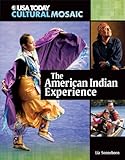
Nonfiction Monday: The American Indian Experience, by Liz Sonneborn

by Liz Sonneborn
Lerner Publishing
978-0-7613-4086-7
Review copy from publisher.
As we mentioned last week, we tend to go through books that portray Native Americans with a fine-toothed comb. Two things made us a bit leery of this book right off the bat:

First there is the "USA Today" heading, with the inclusion of several USA Today articles throughout. Mixing other commercial entities with children's books is rarely a good idea, in our experience, and the media in general is not high on our list of truth-tellers.

Second is the idea (not a new one) of putting all Native American tribes together in one book. That is somewhat akin to putting all European nations together - there is just so much difference between, say, the French and the Ukrainians, how do you do justice to any of them?

On the other hand, this is part of a series from Lerner, and we have seldom been disappointed with their research and quality. We weren't this time, either!

Taking our objections in reverse order, Sonneborn does a great job of making sure we don't lump all Native Americans together. The very first page of text says, "American Indians created many different cultures. In North America alone, they lived within about five hundred tribes." Whenever a specific person is mentioned, so is their tribe (or tribes). Where information about, for example, spirituality, may begin in general terms, further sections as well as sidebars and photograph captions draw out differences in specific cultures (and we loved seeing the note that sand paintings are NOT ARTWORK to purchase and use as a coaster.)

Other than the inclusion of a few articles from past issues of USA Today, we did not note any evidence of commercialization. The information we saw not only seemed accurate (and please tell us if we missed something, we are by no means experts), but it went beyond what we find in much 'juvenile' nonfiction, and we learned quite a bit! (Most exciting news: Sherman Alexie is writing a sequel! We were so stoked, we told the woman at the McDonald's drive-thru, who was somehow not as thrilled as we are.) (Yes, we read while we are waiting in drive-thrus.)

While much negative history is not mentioned (for example, the damage done by 'missionaries' in the past), the focus of this book is meant to be on American Indian cultures today. It does cover aspects many non-Natives might not think about, such as why Columbus Day or Thanksgiving might not be cause to celebrate for everyone. At the same time, it presents these conflicting feelings in a way that would hopefully inspire discussion in a classroom, without coming down heavy-handed in one way or another.

We give this one a 5 out of 5, and strongly recommend adding it to your library's collection.

For more reviews of nonfiction books for kids, check out this week's nonfiction Monday host, Rasco from RIF

Monday, February 21, 2011

It's Here! Nonfiction Monday - and a contest!

We are pleased to be hosting Nonfiction Monday today, a weekly collection of posts from bloggers all over the internet, highlighting great nonfiction children's books. Leave your link in the comments section, and we will add them to the post throughout the day!

baseball
Starting us off with some baseball books, we have

We are a Ship at Bookie Woogie, and

Lipman Pike: America's First Home-Run King at Shelf-Employed.


There was a nasty Oil Spill over at Jean Little Library.

Archaeology Troy History Dig Science
While at Charlotte's Library they are Digging for Troy.


NC Teacher Stuff is in to tell us What's for Dinner.

George Washington crossing the Delaware at the Battle of Trenton

Our first president for the day makes his appearance at proseandkahn in The Crossing,

Four-O'Clocks - Marvel of Peru
and Wild About Nature has a Contest to win a copy of Our Shadow Garden.


Cesar Chavez Day is next month, and True Tales and a Cherry on Top has a review of a picture book biography.


Bored with reading about people's lives? Read about how they died at Bookends.


Here's something different: an iPad app, The Strange and Wonderful World of Ants, which lets you change the reading level!

Normandy Invasion - June 1944 - united-states-of-america photo
The Children's War has a book about...well, a war, with The Orphans of War

Simply Science has Pop! The Invention of Bubblegum today. Btw, while looking for a picture, we found a fun art project they probably won't let us try.
Music Notes

MotherReader has Before There was Mozart, continuing with Black History Month.

And if the ants weren't enough for you, you can read about all sorts of insects at Carrie's Comfy Cozy Reading Nook


What Does the President Look Like? Find out at Lori Calabrese (we're planning to pick this one up ourselves!)

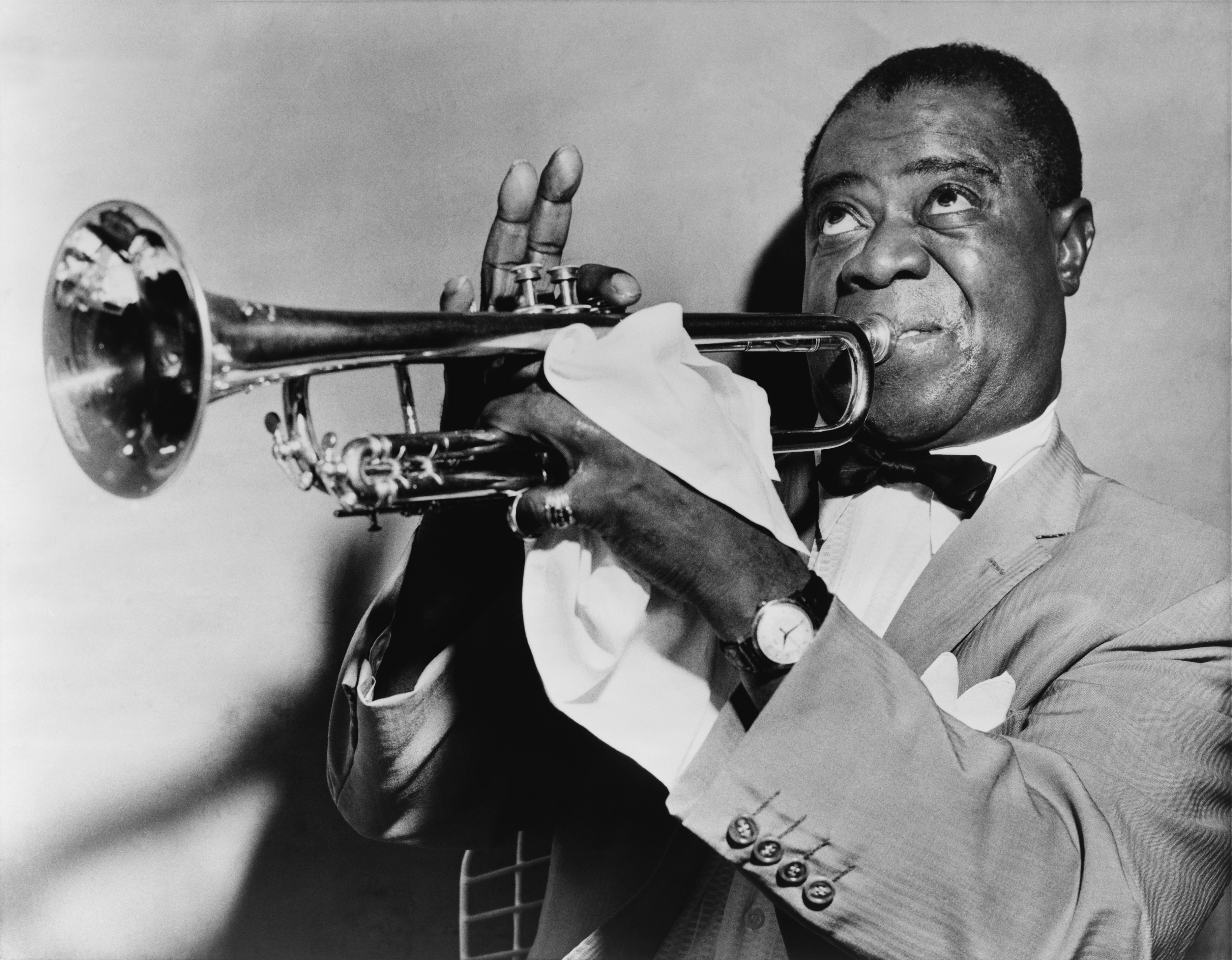
File:Louis Armstrong restored.jpg
More on African-American History month with Play, Louis, Play

Cybils2010-Web-Button

And combining AAH Month, Cybils, AND a giveaway, we have Oprah: the Little Speakerat Check It Out.

Bloggers are stepping it up! More AAH Month and Cybils with reviews of THREE books, we have Wrapped in Foil

We'll have to step things up ourselves. Has anyone noticed the counter at the bottom of our page? We are rapidly approaching the 10,000th visitor mark! We expected that to happen later this week, forgetting about the inevitable surge of Nonfiction Monday.

So...announcing, a contest! Erm...to win...something! Something cool! Books and book-related items! Yes, that's it. And to win...you should...um...comment! This week, on any of our posts! (This week being from today until midnight Sunday) Yes, that's it, every time you comment (and look, 20 lovely bloggers already have), your name will be put in a drawing for something cool, winner to be announced Monday.

We now bring you back to our regularly scheduled Nonfiction Monday, while we go rummage through our closet of cool stuff...

Which brings us to one of our favorite feel-good stories, Nubs: the True Stor of a Mutt, a Marine and  Miracle at All About the Book.

Monday, February 14, 2011

Nonfiction Monday: Is That a Fact? series by Alison Behnke

Lerner Publications
978-0-7613-4914-3
978-0-7613-4913-6
Review copies from publisher.
What does it mean when reading a nonfiction book immediately makes us want to write a fiction book? We're going to say that's a good thing, at least in this case.

Kids love 'factoids'. They also love knowing more than the people around them (as do adults and turtles, let's be honest), and these books are chock full of urban legend-type 'facts' and the truth behind them. At last, the phrase "and called it macaroni" explained!

While each item gets just a two-page spread, it is packed with enough information to move these beyond the grade-school version of a coffee table book. We consider ourselves fairly well-read, but still learned amountain about ancient make-up, cast-iron skillets, and Betty Crocker. Some of the things we learned would be great tidbits to include in a historical fiction novel. Let's say a character in your 16th-century novel dies her hair red (to be like Queen Elizabeth) and experiences unexplained nosebleeds. History buffs will think you're a brilliant researcher for making that connection!

Kids will enjoy these books for their own sake, and won't notice or care when they learn a little science or history along the way (you're going to remember Elizabeth I was a red-head now, aren't you?) For the teacher looking for a little writing motivation, try making each question a story-starter: Is it really dangerous to talk on the phone in a thunderstorm? What could happen to your main character if (s)he did?

Hmm...we feel a good thriller coming on. Excuse us while we go dictate to Miss Ami. In the meantime, you can check out some more great nonfiction reviews at Wrapped in Foil, today's host of Nonfiction Monday.

Monday, January 17, 2011

Nonfiction Monday: Orange Everywhere, by Kristin Sterling

by Kristin Sterling
Lerner Publications
978-0761354352
...and black, and red, and green, and purple...Color books are popular with preschoolers and their parents. We often see them checked out by parents making the first forays into possibly home schooling their kids. With as much use as we know these will get, it's good to have Lerner's fantastic binding to help them hold up!

This series goes a bit beyond just naming things of a certain color, and we think home schoolers especially will enjoy it. We have sections on various shades of the color, something that is not usually addressed but can be confusing to small kids (how can the sky and my jeans be the same color?) Complimentary colors are mentioned - a potential lesson in itself. Recipes, activities, and fun facts (did you know carrots were once white?), as well as the now-expected index, glossary, and web sites to visit round the book out nicely, and can easily give you material for a week-long unit.

Any school or library serving preschoolers will want to have this set on hand. We give it a

5 out of 5.

For more great reviews of nonfiction for kids, swim on over to NC Teacher Stuff

Monday, January 10, 2011

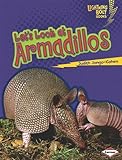
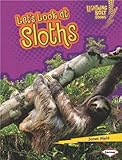
Nonfiction Monday: Let's Look at Sloths and Armadillos

by Judith Jango-Cohen
Lerner Publications Company
978-0-7613-3887-1
by Janet Piehl
Lerner Publications Company
978-0-8225-7900-7
We have only one minor issue with this series,but we noticed it right off the bat. Thus far the series includes;

armadillos
bats
brown bears
earthworms
iguanas
monarch butterflies
pigeons
prairie dogs
sea otters
sharks
sloths
and snails

Notice anything conspicuously MISSING? I mean, we know they can't possibly get a series out with every animal in the world right off the bat, but - earthworms? They don't even have cute little faces like turtles do! They don't have faces!!! And pigeons? Seriously? The creature that originated the phrase "bird-brained"? A winged animal that thinks it is more expedient to try to WALK out of the way of your car in the parking lot, rather than, I don't know, FLY???

(Deep breath). Okay, we feel better now. And we do have to admit that sloths and armadillos are pretty cool, which is why we chose these two to review. Who could not love this face, after all?

Howdy!
And don't we all wish we could move slowly enough for algae to grow in our fur? Well, you know what we mean. Hang out, eat, sleep, maybe go for an occasional swim. No wonder they smile!

Armadillos, on the other hand, are cute in their own way.
especially the babies
They have cool shells like we do, like both bugs and plants like us, and we can both swim and dig. Many people forget, though, that armadillos are mammals, not reptiles - the scaly-looking skin throws them off! So, we can't quite call them cousins, but we still enjoyed reading about them.

This series is great for begining nonfiction readers, with short text in attractive fonts, big clear photographs, and extras such as a range map (we really liked those), diagrams, glossary, and further reading/web site lists. We give the series a

5 out of 5

and plan to buy the rest of the books. Especially, hint hint, if they add one on turtles.

For more great nonfiction book reviews, click over to Tales from the Rushmore Kid for Nonfiction Monday.

Monday, November 29, 2010

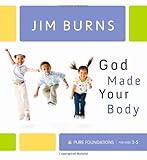
Nonfiction Monday: God Made Your Body and How God Makes Babies by Jim Burns - and an announcement!

by Jim Burns
Bethany House
978-0-7642-0211-7
by Jim Burns
Bethany House
978-0764202100

       Miss Ami posting today! The turtles are still sleeping off their Thanksgiving feasting - lucky reptiles.

I first came across these two books last year, when I was pregnant with my youngest. My teenager is pretty clear on general concepts (and, after being in the delivery room, is also pretty clear on avoiding all possibilities for a while!) but I have three younger boys, then aged 3, 5 and 6. Their initial questions were along the lines of, "How is the doctor going to get the baby out?", followed by the inevitable, "How did the baby get in there in the first place?"

Every parent handles these questions differently, and since you know your kids best, you know what works best for you. We tend to use accurate names for body parts, and try to give straightforward answers that are age-appropriate. Even the most open parent, however, can stumble and stammer a bit trying to find the right words, and that's where a good book can come in really handy!

Burns takes a very straightforward approach I appreciated, with a Christian viewpoint that I also like. The religious message is not heavy-handed, so you can hand these to a variety of patrons looking for a way to explain the differences between boys and girls, or where babies come from. For example:

To every little girl God gave a vagina and a womb. Little girls grow up to become women, and because they have these special parts in their bodies, they can become mommies. (pg. 14 God Made Your Body)
The text is accompanied by pictures of multi-racial children and a simple line drawing.

These books are geared toward children around the ages of 3-7. Some parts may be a bit technical for the 3-year-old, but it is a simple matter to skip over those for the time being. Explanations are, for the most part, very simple and easy to understand. Objects familiar to a child, such as a Cheerio or an orange slice, are used to show how big a baby is at different stages of gestation.

The only part we take issue with is the section in both on adoption. We love that it is included as a way families are formed, but we wish that a) Burns had included families formed by marriage (where the parents already have children), and b) Burns had NOT stated, "The birth parents lovingly choose to have someone else raise the child." Um...sometimes. Very often, though, adoption has more to do with the decisions of social workers and judges than any selflessness on the parents' part.

That bit aside, these books were perfect for our family, and were read over and over last year. And now it's time to dust them off again! Yep, Miss Ami is expecting again, due in August (one week after summer reading - do we plan things well, or what?!) Great news to start the holiday season with!

For more reviews of great nonfiction books, click over to Playing by the Book.

Monday, November 22, 2010

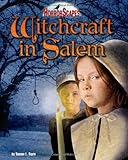
Nonfiction Monday: Witchcraft in Salem, by Steven Stern

by Steven L. Stern
Bearport Publishing
978-1-936088-00-3
Review copy sent by publisher.

The Salem Witch Trials are one of those events in history that continue to enthrall readers of all ages. This book gives a concise overview of the events and names associated with it, as well as possible reasons for the girls' behavior and accusations, and the citizens' willingness to believe them.

The book has the aura of wanting to sensationalize or spook readers (and it is, after all, part of a series titled "Horrorscapes"), but nothing in the text was inaccurate or exaggerated. Some of the pictures add nicely to the background information, from photographs of tombstones and a fungus that could have caused hallucinations, to a map showing how politics may have come into play. Other pictures, however, are a bit bizarre, making us think about bad photoshopping, and distracting a bit from the text (pg. 4-5 is a good example).

If your library size or patron interest warrants a good-sized collection of books on this subject, we recommend adding this one, but we wouldn't make it our sole source. We give it a

3 out of 5.

For more reviews of great nonfiction books, click over to Practically Paradise.

Monday, November 1, 2010

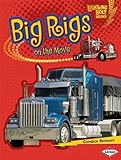
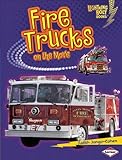
Nonfiction Monday: Big Rigs and Fire Trucks on the Move

by Judith Jango-Cohen
Lerner Publications
978-0-7613-6023-0
by Candice Ransom
Lerner Publications
978-0-7613-3919-9
We are always happy to see good nonfiction titles for the younger set, and these certainly fit the bill. Boys (and many girls) will always be enthralled with automobiles, so you really can't go wrong with this series.

What's the first thing youngsters do with a toy fire engine? Start making the sounds! That is exactly how Fire Trucks on the Move begins:
WHEE-OOO! WHEE-OOO! What is making such a loud sound?
Text is accompanied by a close-up picture of a siren, and a larger photo showing where it is located on the truck. The rest of the book follows the same pattern, with one or two sentences in a large, clear font paired with bright, colorful photographs.

Big Rigs on the Move lists other terms we might use (semis, eighteen-wheelers), and shows readers some of the specialized types of big rigs far carrying particular cargos. The back of each book includes a diagram, glossary, Fun Facts, and books and web sites for further reading.

There are possibly as many books about cars out there as there are kids who like cars, but the format, information and just overall quality place these way above the mass-marketed dollar store variety. They are perfect for either reluctant or beginning readers, and we give the set a

5 out of 5

We also think this will be the start of our Christmas shopping! Buy your favorite youngster a nice noisy fire truck or pickup, and include a copy of the appropriate book. Stay tuned over the next couple months for more gift ideas* (just 54 shopping days left!)

*for us? Why, how sweet of you to ask! Some goldfish would be yummy. What, and humans don't eat anything disgusting?!

Monday, October 18, 2010

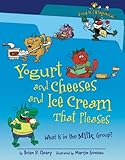
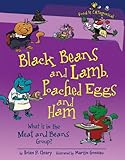
Nonfiction Monday: Lerner's Food is CATegorical series by Brian P. Cleary

  Fun read-alouds about the food groups, who'd a'thunk it? Each of the books in this series is written in a snappy rhyme, imparting information about food group members, serving sizes and nutrients simply and memorably. Creative teachers (or their students) might even try memorizing the text as a rap, or setting it to music. (Note: teachers may, however, not want to encourage pantomiming, with lines such as : Milk strengthens your teeth, making two healthy rows. At times, when you laugh, it comes out of your nose!)

The illustrations, by Martin Goneau, are very cute and add to the energy of the text. We have to admit, until we looked at the series title, we didn't realize they were all cats, but that doesn't detract from the fun at all. Many of them just looked more like little gremliny creatures to us, biting an annoyed-looking cow on the butt, or sporting a hair net while preparing cheese.

These cute little cat/gremlins offer other salient facts efore and after the main text, including more concrete examples of what an actual serving of that food group is. A great series for any elementary school classroom or library! We give them a

5 out of 5.

For more great nonfiction reads, hop over to MotherReader.

Monday, October 11, 2010

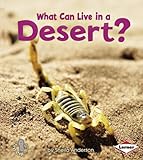
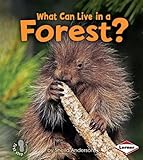
Nonfiction Monday:Animal Adaptation series from Lerner, by Sheila Anderson


One of the most common questions you will hear from young children when you are reading something particularly interesting to them is, "Is it real?" Nonfiction is huge with the lower elementary set, especially (and please don't bash us for being sexist, because it's true) boys. Trucks, space, dinosaurs, and animals, animals, animals!

Unfortunately, there has been a trend for a long time to skip the science in younger grades - reading and math are SO much more important, we have too many phonics and flashcard drills to do to mess around with science and social studies, except for maybe half an hour on Fridays. By fifth grade, when standardized tests start counting those subjects and we start trying to make up for lost time, many of the kids have lost interest.

Fortunately (hmm, this is starting to read like a popular old story), publishers have started listening to the poor beleaguered teachers waving their hands and saying, "Can't we COMBINE reading and science? I mean, isn't that how we know kids learn best?"

Enter the nonfiction books we refer to at our library as "Junior Readers". These aren't new by any means, but the quality has improved SO much in the past 5 or 10 years - both in substance and in appeal. This is one such series. The pictures are clear and beautiful (we want a porcupine!), the text is just right for, say, a first grader, without sounding too choppy or dull. "Fun Facts" at the end provide just a little more trivia, and a short glossary and index offer an introduction to the parts of a nonfiction book.

Know what animal we would like to see in books of this type, though? People. Not just because many small children don't realize that people are mostly animals (we have known a few that more resembled vegetables), but because children who have grown up exclusively in one type of habitat sometimes don't realize people live amongst the scorpions and roadrunners, or the bighorn sheep. That's just personal commentary, not a negative reflection on this series.


We live in a somewhat unique area that includes all three of the above habitats - in a forest on a mountain range that surrounds a desert. In any given day Miss Ami may see a mountain lion, a skunk, and a deer on the way to work, where she may have to shoo a gecko away from the door. Our young patrons are sure to enjoy this series, and we will be ordering the rest of the titles (covering grasslands, lakes, and the ocean) shortly. We give them a

5 out of 5.

Don't forget to check out the other nonfiction Monday posts.

Monday, September 27, 2010

Nonfiction Monday - Frozen Secrets: Antarctica Revealed, by Sally M. Walker

Frozen Secrets: Antarctica Revealed
Sally M. Walker
Carolrhoda Books
978-1-58013-607-5
review copy provided by publisher


Last year we reviewed a cute little picture book by Walker. A quick search of our catalog, however, will find her name dotted throughout the nonfiction section, everywhere from mosquitos to the Civil War. Today she is bringing us to the very end of the Dewey Decimal system, and the very bottom of the panet.

Of course, 'bottom' depends on your perspective, doesn't it? As soon as we open the book we are greeted by a beautiful picture of the earth with Antarctica front and center. As most of our kids are used to seeing North America most prominently featured, teachers or parents could stop right here and teach an entire lesson. How do you suppose the globe is pictured in, say, a German science book? Australian? Grab a globe and try drawing the continents and oceans from different perspectives. Introduce the concept of hemispheres. Branch off into national or personal egocentrism and how that effects politics, culture, etc. Lots of great learning, and we haven't even reached the text!

The next page, and many many following, give us some breathtaking views of Antarctica. They almost make us want to go there ourselves - and we don't like cold! Need we remind you, we are turtles - cold-blooded - we spend our days basking under a sun lamp. It takes a lot to even tempt us to venture somewhere covered in (shudder) ice!

Walker begins with a description of exactly how cold it is, followed by an account of Robert Falcon Scott's ill-fated expedition, then contrasting it with more recent expeditions using modern technology. Vivid descriptions draw the reader in without being overly romanticized. Everything from geology to engineering to dinosaurs is covered rather thoroughly. A reluctant reader might skip around to the 'exciting parts', but any young person into science will devour every word.

A must-have for middle to high school libraries, and a good gift for your budding scientist. We give it a
 
5 out of 5

Monday, August 30, 2010

Nonfiction Monday: Shih Tzus and Boston Terriers are the Best! by Elaine Landau

So, our custodian is retired Navy. Big guy. Fixes up cars. Drives a Mustang. What kind of dog does he have?

Yep, a little fuzzball. Cute little guy, too! He has come to visit a few times, and we love that he doesn't bark his head off like some little dogs. We're more familiar with big dogs ourselves, so when this book arrived from Lerner, we asked him to check it over for accuracy. As we expected, it passed the test.

This is the third set we have received from this series (see an earlier review here), and we are happy to see Lerner is continuing with the same quality. Many breed-specific dog books for children fall into one of several pitfalls. Some aren't really very breed-specific at all. Some focus too much on the positive attributes of a breed, making everyone want to go out and adopt one without knowing what they are getting into. Some swing so hard the other way, the reader is left feeling ambivalant at best.

We do have to point out the first 'mistake' we have noticed in these books, although it is a tiny one.


In Boston Terriers are the Best, right next to a caption stating "Ask your vet how much food you should give your BT", we see a photo of a Boston Terrier munching from a bowl of food bigger than he is. Probably NOT what your vet is going to recommend. Many of the photos in this series feature a large animal/head/object in the forefront, and this is just following suit. Not a huge deal, but since the photos and text in this series usually match up so well, we thought it worth mentioning.

That tiny detail aside, these books contain a thorough and accurate overview of each breed, while maintaining a very upbeat and accessible style. As we mentioned, we are more into big dogs. These books don't make us want to run out and get a Shih tzu (it's hard to groom a puppy when your flippers can't hold a brush), but we do have an appreciation now for their happy little personalities, or for the Boston terrier's intelligence. If your library can only get one series of dog books, we strongly suggest this one! We give both of these a

5 out of 5.

For more reviews of nonfiction books, hop over to The Book Nosher (We love that name!)

Sunday, August 1, 2010

Nonfiction Monday

We are excited to be hosting this week's Nonfiction Monday, a round-up of blog posts about great nonfiction books for kids! To add yours, just post the link in the comments area, and we'll get it up as soon as possible!

This week we have been reviewing books currently on sale at our Scholastic Book Fair, so we thought we'd combine the two:


Just what every young boy (or girl) needs: advice and how-tos on making noises with body parts, or using a shirt-egg-slingshot! In fact, we just gave this as a gift to a young man, bookmarking the pages we liked best with $1 bills.
 
The first volume of this 'encyclopedia' is already in our collection, and has been fairly popular, despite its Dewey classification in the no-man's land of "indoor amusements". Librarians know; there are certain sections of nonfiction that get used so often, everyone has the Dewey numbers memorized (quick, where are dinosaurs? You didn't even have to think about it, did you?) Then there are the areas that have great books, but seem to grow cobwebs (i.e. the entire first half of the 300's, unless it's Martin Luther King, Jr.'s birthday).
 
So, we book talk, we have special displays, we put them on recommended reading lists. That brings us to our challenge for Nonfiction Monday: if the book you are reviewing just wasn't flying off the shelves, what would you suggest to draw attention to it? It doesn't have to be anything complicated or involving movie stars and world records. We have had an easel with chart paper up all summer, inviting people to suggest free or cheap activities to answer the "I'm bored" complaints. When we type up the final compilation, we will include book titles like this one at the end.
 
So, what do you think? Help out some librarians who have had their brains fried by summer reading! And don't forget to check out the links to everyone else's blogs!


*****
Angela at Bookish Blather is first up this morning with a review of Hungry by Crystal Renn (and, Angela, when we say "first up", we mean, whatever time zone you are in, that is still way too early to be up!)

Charlotte at Charlotte's Library (who was also awake before us) has Do Not Open: an Encyclopedia of the World's Best-Kept Secrets by DK.

Jennifer at the Jean Little Library has The Smart Aleck's Guide to American History by Adam Selzer. We are sensing a theme of boy-friendly books today.

Laura has a book I've been wanting to read, Saving the Baghdad Zoo, as well as some great ideas in her comment that we are totally going to borrow.

Abby the Librarian has Kindergarten Day: USA and China by Trish Marx and Ellen B. Sinsei, to get us ready for the start of school (two more weeks here!), and another great advertising idea.

Coming to us live from the School Library Journal, A Fuse #8 Production has Ballet for Martha: Making Appalachian Spring

The Fourth Musketeer has No Easy Way: the Story of Ted Williams and the Last .400 Season, fourth installment in her Boys of Summer series.

Time to check our links then open up the library (oh, yeah, our actual job). More great reviews to come!

*****
Check out Face to Face with Manatees at Bookends (we SO want a manatee playmate, but our tank is just a bit too small.)

Escape! The Story of the Great Houdini at proseandkahn (love that blog title!)

Pop! the Invention of Bubblegumon Carrie's Comfy Cozy Reading Nook, complete with a link to help you make your own bubble gum.

Drive over to NC Teacher Stuff for Dump Trucks

We could have used a copy of Ocean Soup this summer. Cute pictures, and Shirley at SimplyScience includes some fun activities.
Wild About Nature has Animal Baths: Wild and Wonderful Ways Animals Get Clean, another one that would have been great this summer (isn't that the way it always happens?!) Oh, and they have largely the same page setup/colors that we do, so you know they have good taste.

Learn How Baseball Managers Use Math at All About the Books.

Read aboutSummer Birds: the Butterflies of Maria Merianat Picture Book of the Day. (We won't tell you how we like to 'study' butterflies. And caterpillars. Yum.)

We have to ask Wendie at Wendie's Wanderings: does Lots of Spots include any turtles? We love Ehlert's illustrations!

Monday, July 26, 2010

Nonfiction Monday: Goal! by Mina Javaherbin


We are fudging a little, in that this is a fiction picture book, but based on real events that go on today. Back in May, we reviewed another book titled "Goal", about the history of soccer. One of the things we found interesting was that soccer was outlawed in some places - even punishable by death. Yet people still played.
 
In some places in the world, playing soccer can still be dangerous. Just being out on the streets is taking a risk, and gathering in groups can attract unwanted attention. Yet still, children play. Because after all, no matter what is going on around them, children are still children, and it is inspiring and refreshing to see them just enjoying themselves for a little bit.
 
Javaherbin has done an excellent job of presenting a book that can be read to any age group. Younger ones will simply understand that bullies want the ball, while older ones will be able to see and discuss some of the more implied threats, making this a great discussion starter. We give it a
 
5 out of 5.

Monday, July 19, 2010

Nonfiction Monday: Media Literacy series from Capstone Press


This series includes the titles:
At the Controls: Questioning Video and Computer Games
Coming Distractions: Questioning Movies
Music Madness: Questioning Music and Music Videos
Pretty in Print: Questioning Magazines
TV Takeover: Questioning Television
Virtually True: Questioning Online Media
What's Your Source?: Questioning the News, and
Yourspace: Questioning New Media
 
On the one hand, these definitely fill a niche. While there have been general books about internet safety out for years now, there aren't too many for kids addressing specific sites like MySpace. Kids (and adults) tend to automatically go to the internet for report information, but do not understand in the least how to evaluate the information they find there. Our library ordered this series to fill that niche, and so far they have been checking out (mostly via parents wanting their kids to read them. Kids already know everything.)
 
On the other hand, we are a bit confused as to what the intended niche/audience is. If a child is computer-savvy enough to set up his own Facebook page, would he really need you to define a "wall post"? At times, the books read as more of a primer for older folks (like Miss Ami) who aren't up to speed on all the new technology and lingo.
 
Language and tone issues aside, these books contain a lot of good information, and give important warnings without sounding too preachy. Readers are shown how to find out who created a web site - and why that matters - and how to spot product placements in TV shows. Both kids and adults may learn some things they didn't know. Warning: reading the entire series back to back can make you extremely paranoid and suspicious of everything you see and hear - which, these days, may not be a bad thing! The layout of the pages is very kid-friendly, lots of sidebars, familiar pictures, and varying page designs.
 
For more great reviews of nonfiction finds, click on over here. And stay tuned - in a couple more weeks, we will be hosting Nonfiction Monday ourselves! (We almost feel like real bloggers!)

Monday, June 28, 2010

Nonfiction Monday: The Wonder Book by Amy Krouse Rosenthal


A quirky, fun book by one of our favorite quirky, fun writers. Kids who giggle at Mom or Dad changing the words of songs ("Baa baa baby, have you any drool?") will love chuckling over this one with their parents. Silly poems like "The Less Famous Friends of Mary Mack" and groaners like the "Word Play (in Four Acts)" are illustrated in simple, cute line drawings by Paul Schmid. While some lines ("If oranges are oranges, I wonder why apples aren't called reds") are hardly new to adults, they may spark a child's imagination - and you may be surprised at what they then come up with on their own!

This book has plenty to inspire further creativity, and kids will want to hear some parts over and over again. Our only complaint is that it could have been longer and included more! We give it a

4 out of 5.

Monday, June 14, 2010

Nonfiction Monday: Unshelved collections, by Bill Barnes and Gene Ambaum


We are cheating a little on our Nonfiction Monday selection by blogging comics, but only a little. Comic books are shelved here, as in many libraries, in the 700's, so that makes them nonfiction. Better yet, if you've ever worked in a library, it won't take you long to recognize every scenario in these strips!

Dewey, the young adult librarian and main character, says the things librarians would like to say but would probably get fired for. For example, remember just Friday we were complaining about the AC going all wonky? Here is today's comic strip (which we receive on our work e-mail because it is TOTALLY work related):


Hmm...would printing this out and taping it to the thermostat be considered just as bad as saying it ourselves?

Some time ago, we ordered the entire seven-book (so far) collection, and we have been stretching it out to read only on our lunch hours (yes, turtles get lunch hours - what, you think we don't have to work, too?) As one reviewer (Michael Jantze, creator of The Norm) warns, "Do not read this book in a library. You will get in trouble for laughing out loud." We are always getting in trouble, so that's nothing new.

You don't have to work in a library to appreciate the humor, though! This is a great set for your personal library, your staff lounge, or your library shelves. You can click on the link above to order through Amazon, or go to their web site, http://www.unshelved.com/ (for some reason, Blogger is not letting me link). They have t-shirts!

For more reviews of great nonfiction books, click over here.